The water
The water in Sapadere Canyon
It arrives cold and leaves cold, in August as much as in April, and the colour is the rock it has been living in. What is actually going on in those pools.
Atalay Tour, Alanya
Where the water comes from
Nothing in this canyon comes off the coast. The river is fed by springs in the Taurus behind Sapadere village, and a spring in limestone country is not a surface stream that has been lying about in the sun. Rain lands high on the mountain, sinks into the rock through cracks and old solution channels, and travels a long way underground — out of the light, out of the wind, through stone that sits at much the same temperature the whole year round. What comes back out at the canyon floor is at the temperature of the rock it has been living in, not the temperature of the day it appears on.
That is the entire answer to the question people ask halfway along the walkway. The sea below Alanya lies open to the sun all summer and warms up because it has nowhere else to put the heat. This river spends most of its life underground and the rest of it in a hurry.
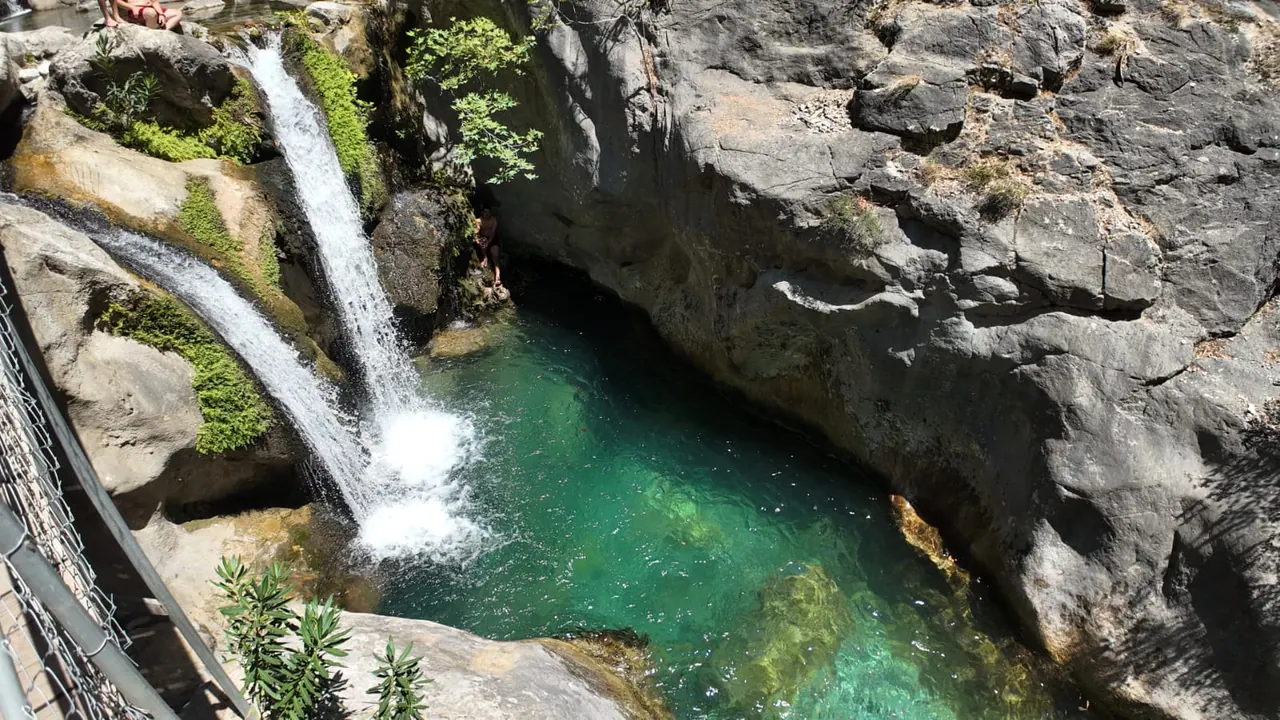
Why a hot August never reaches it
Two things keep it cold once it is out in the open. The first is speed. The river drops the length of the gorge and is never still long enough for the sun to get any work done on it. The second is the gorge itself. The walls close in until the sky overhead is a strip, and the sun gets only a narrow window in which to reach the river at all — a few hours in the middle of the day, after which the shade takes the floor back. Tour groups arrive inside that window, which is why the photographs look lit. The river spends the remainder of the day, and the whole of the night, out of the sun altogether.
Cold in April, cold in August: the calendar does not get a vote. That is not a sales line, it is the mechanism the day runs on — you step off a coast at the hottest point of a Turkish summer into a corridor of stone where the air is cooler and the river has no idea what season it is.
What the cold actually does to a person
You will not find a number for it anywhere on this site. Nobody on the tour carries a thermometer, and a figure lifted off somebody else's page is a figure we could not stand behind if a guest held us to it.
What we can describe is the pattern, because we watch it happen every week. People wade in to the ankles and stop there. They negotiate with themselves for a while. Then they commit — slowly, and near the edge, which is what the guide asks for — and there is a sound; it is the same sound from everybody. The chest tightens for a breath or two and then lets go. Hands and feet start to ache soon after, and most people are back on a warm rock well before they intended to be. Swimming here is optional, and it happens only where the guide allows it on the day. Long, leisurely swimming does not happen here. It is a short sharp thing, and it is what people remember out of a whole day in the mountains.
One practical consequence: limestone that has had a river running over it for a very long time is polished, and polished stone under water is slick. Shoes with grip earn their place at the pools more than anywhere else on the walk.
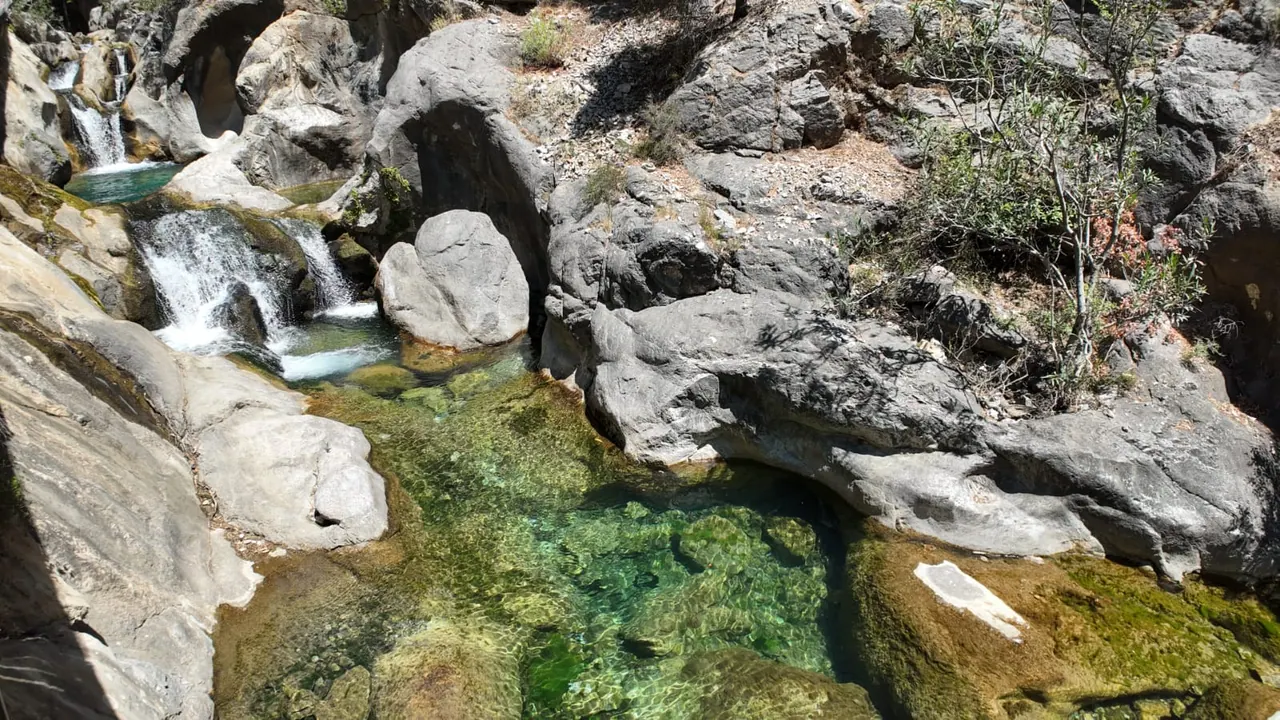
Why the pools read green
Two separate effects make the colour, and they stack on top of each other.
The first is the limestone. Water moving through that rock dissolves a little of it and carries it along in solution. When it surfaces and loses pressure and carbon dioxide, part of that mineral load comes back out as particles so fine you will never see an individual one — but there are enough of them to scatter light, and light scattered inside water comes back to your eye at the blue-green end. It is the same effect that makes a far-off ridge look blue while the air in front of your face looks like nothing at all.
The second is depth, and what is lying underneath. Clear water absorbs red light before anything else, so the further you are looking down through it, the more of the warm end has already been stripped out: a deep basin reads bottle-green and darker still where the rock undercuts it, a shallow one a pale mineral green. The bed here is pale stone, and pale stone throws whatever light survives straight back up at you. Put a bright floor under clear water full of fine mineral and you have the colour in the photographs, with no filter applied to it.
Why no two pools look the same
Stand still on the walkway and the colour changes from one basin to the next, sometimes inside a single photograph. Depth does most of the work — the plunge pools under the falls go bottle-green and nearly black where the rock undercuts them, while the wide shallow stretches upstream are a pale mineral green with every stone on the bottom countable.
The rest is circumstance. Where a cascade lands, the water is full of air and turns white; no colour survives that much bubble. Where moss and algae have taken hold on the rock, the green in your picture is partly plant and not water at all. Where the wall overhangs, the pool darkens because it is reflecting stone rather than sky. And since the sun only gets down to the floor of the gorge for part of the day, the same pool shot in the morning and shot after lunch is two different colours.
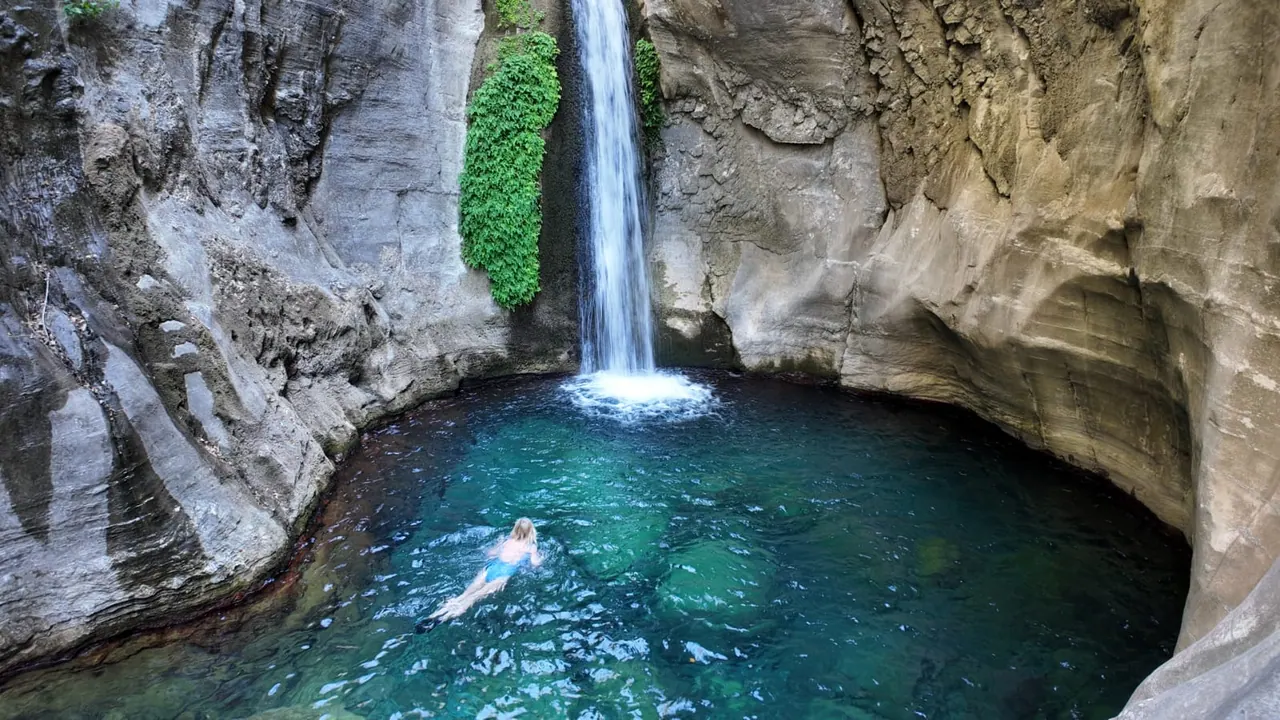
What rain does to all of it
The colour is a fair-weather property. After heavy rain the mountain sheds surface water as well as spring water, and surface water arrives carrying soil off the slopes. The level comes up, the green turns a flat grey-brown, and the bed you could count stones through is simply not visible any more. The clarity comes back as the flow drops; how long that takes is the rain's business, and not something anyone here times.
That matters for more than photographs. With the river high, the walkway and the pools may both be shut, the guide keeps the group away from the edge, and a departure that cannot run is rescheduled or cancelled at no cost to you. Winter does the same thing for longer stretches at a time. If you are deciding when to come, rain is the variable that decides what the water looks like. The cold is not a variable. It is there in April and it is there in August, and the guests who enjoy it most are the ones who arrived expecting it.
The pools are the part of the day guests describe to other people afterwards, and the part no photograph quite gets right — a still image cannot do cold. The canyon tour from Alanya carries the hotel pickup, the canyon ticket and lunch, and you pay the operator on the day itself. Bring a towel and something dry to put on.
FAQ
Frequently asked questions
Why is Sapadere Canyon's water cold even in August?
Cold enough that most guests are in and out again inside a few minutes, and that holds for August as firmly as for April. No figure is published here: nobody on the tour carries a thermometer, and we will not republish a number we have not taken ourselves.
Why is the water turquoise?
Very fine limestone particles carried out of the mountain scatter light towards the blue-green end, and the pale rock bed reflects what is left back up through clear water. Depth then decides how dark that green goes.
Does the water warm up later in the summer?
The air does. The water barely registers it — the springs deliver at much the same temperature all year, so an August pool feels roughly like an April one. What changes in August is how hot you are when you get in.
Why is the water in Sapadere Canyon sometimes brown?
Rain upstream, almost certainly. Run-off carries soil into the river and the clarity goes for a few days afterwards. It is also the condition in which the guide is most likely to keep the group out of the pools altogether.
Not answered here? Ask us on WhatsApp
Read next
Can you swim in Sapadere Canyon?
Where swimming is possible, how cold the water really is, what to wear in it, and whether children can go in.
Read more →What to wear and bring to Sapadere Canyon
The packing list: shoes, swimwear, layers, sun, cash — and the one rule about food and drink.
Read more →The best time to visit Sapadere Canyon
High summer, spring and autumn, rain and winter — when the canyon is at its best and when a tour may not run.
Read more →The Sapadere Canyon tour specialist
Ready to explore Sapadere Canyon?
From 33 € per person · free hotel pickup · pay on the tour day · free cancellation up to 24 hours before.